
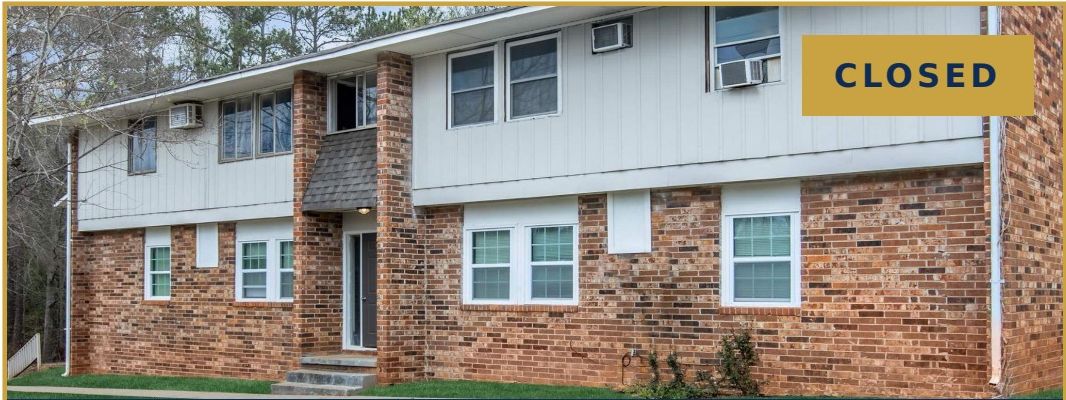
Deferred maintenance — the debt that never shows up on a balance sheet
Paint is cheap, and it is the first thing a seller buys. The work a building did not get has a date attached — and it rarely appears in the numbers you read first.
Somebody in this group will tour a property this month, see fresh paint and clean units, and read it as a building in good shape. Paint is cheap, and it is the first thing a seller buys. The mistake does not announce itself for two or three years.
Deferred maintenance is work the building needed and did not get. A roof in year twenty-two of a twenty-five-year life. Sewer lines that get snaked instead of replaced. A parking lot patched for six summers. None of it stops the property from operating today. All of it has a date attached.
Here is why it stays hidden. Capital expenditures sit outside NOI, the property's income after operating expenses. Replacing a roof does not touch NOI, so it does not touch value at a given cap rate, so it never appears in the numbers you read first.
Round numbers, to make it concrete. This is an illustration, not a real deal. A 150-unit property needs $900,000 of roofs, $300,000 of sewer work and $150,000 of parking lot inside five years. That is $1,350,000, or $270,000 a year. The underwriting reserves $300 per unit per year, or $45,000. The plan sets aside one dollar for every six the building will ask for. Across five years the gap is $1,125,000. It comes out of distributions, a capital call, or your sale price.
Three things follow. Deferred maintenance lowers a purchase price only if someone negotiates it, so ask whether the inspection findings moved the number. A capital budget is a forecast, and forecasts written to make a deal work run thin in year one and generous in year four. And age of system matters more than age of building, because a 1985 property with a 2021 roof is younger than a 2005 property with its original one.
A building does not forgive the work it did not get. It postpones the invoice.
Ask a sponsor three things. What remaining useful life did the property condition report give the roofs, HVAC and plumbing? What is the per-unit capital reserve, and how was that number chosen? If a major system fails in year two, where does the money come from?
Every building is on a replacement schedule. The only question is whether it runs on your timeline or the one the last owner ignored.
What is the most expensive surprise a property has handed you after closing?
Get each piece by email.
Notes on multifamily underwriting, operations, and market conditions. No pitches.
Unsubscribe any time. We never share your address.
This article is for informational and educational purposes only. It is not an offer to sell or a solicitation to buy any security, and it is not investment, legal, or tax advice. Figures used as illustrations are not results of any actual transaction. Past performance does not guarantee future results. All investments involve risk of loss.